


The journey of a jewelry brand, from a budding concept to a globally recognized entity, is defined by strategic partnerships and manufacturing decisions. In the complex world of fine and fashion jewelry production, two acronyms dominate the supply chain: ODM (Original Design Manufacturing) and OEM (Original Equipment Manufacturing). Choosing between them is not merely a logistical decision; it’s a critical strategic choice that determines a brand’s intellectual property (IP) ownership, speed-to-market, risk profile, and long-term brand identity.
Royi Sal, a leading silver and gold jewelry designer and manufacturer based in Thailand, specializes in providing both of these production models. By understanding the core distinctions, a brand can effectively leverage Royi Sal’s advanced capabilities—from 3D CAD modeling to ethical sourcing—to maximize success at every stage of its growth.
From ODM to OEM: When and Why
I. Original Design Manufacturing (ODM): The Blueprint for Speed and Efficiency
A. Defining ODM: The Turnkey Solution
Original Design Manufacturing (ODM) refers to a process where the manufacturer designs and develops the entire product, which is then sold to a brand under that brand’s private label. Essentially, the manufacturer owns the design rights, and the client simply selects a model from the manufacturer’s existing catalog or modifies a pre-existing design.
B. When to Choose ODM (The “Why”): Minimizing Risk and Maximizing Velocity
ODM is the ideal starting point for businesses prioritizing speed, minimizing upfront investment, and testing market viability.
1. Low Barrier to Entry for Startups
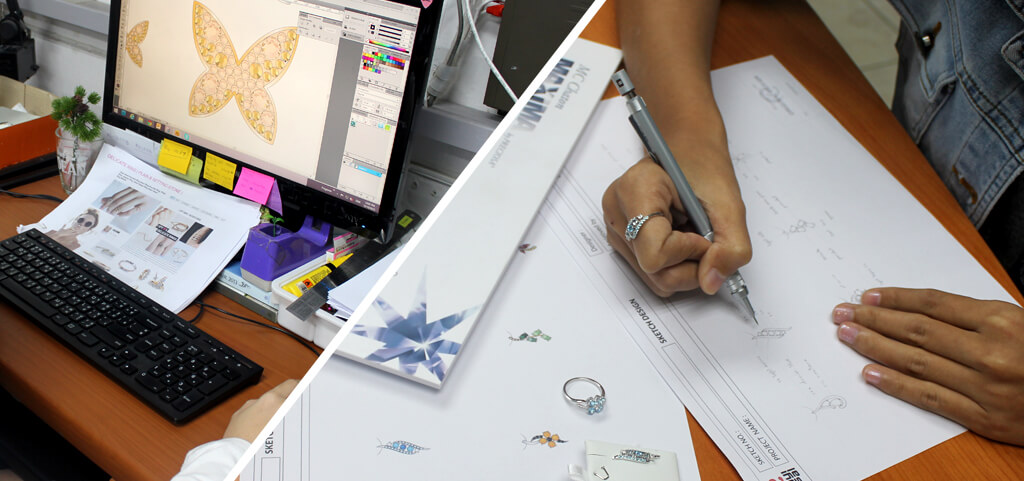
New or smaller brands often lack the resources, time, and in-house expertise to develop complex jewelry designs and technical blueprints (CAD files) from scratch. By utilizing Royi Sal’s ODM capabilities, brands can immediately access a professionally designed, market-tested portfolio. This bypasses the need for expensive CAD designers, rapid prototyping, and extensive feasibility studies.
2. Accelerating Time-to-Market
The biggest advantage of ODM is its incredible speed. Since the designs are ready, the product moves directly into sampling and production. This velocity is crucial in the fast-paced world of fashion jewelry, allowing brands to capitalize on seasonal trends immediately. Royi Sal, for instance, offers ready-made collections and designs that enable retailers to quickly refresh their inventory without a six-month design cycle.
3. Reduced Design and Production Risk
With ODM, the production risk is significantly lower. The manufacturer has already perfected the item’s technical specifications, including stone setting, metal weights, and structural integrity. This turnkey solution guarantees quality and production feasibility, ensuring that the final item will be manufactured correctly and consistently.
Does your product look suspiciously similar to a competitor’s, just with a different logo? That’s a classic sign. With an ODM, you have little to no control over the core design or internal components, making true differentiation nearly impossible. Furthermore, you don’t own the intellectual property (IP) for the product’s design. This means your manufacturer could potentially sell the same base product to a new competitor at any time. You’re essentially building your brand’s reputation on a foundation that you don’t own. When your customer feedback calls for unique features or significant quality improvements that are outside the scope of the original design, you’ve hit the ceiling.
II. Original Equipment Manufacturing (OEM): The Path to True Brand Identity
A. Defining OEM: Full Customization and Exclusivity
Original Equipment Manufacturing (OEM) is the process in which a brand provides the manufacturer with the complete, unique design specifications. The brand owns the Intellectual Property (IP), and the manufacturer acts strictly as the production partner. The manufacturer’s role is to faithfully execute the brand’s proprietary design, transforming sketches and CAD files into physical goods.
B. When to Choose OEM (The “Why”): Establishing Uniqueness and IP
OEM becomes essential when a brand reaches a maturity level that demands exclusivity, control, and a differentiated market presence.
1. Establishing a Unique Brand DNA and Exclusivity
To build a sustainable brand, a proprietary design portfolio is non-negotiable. OEM allows the brand to create exclusive pieces that cannot be legally replicated by competitors, protecting their market share. This is crucial for achieving high-margin, recognizable signature collections.
2. Leveraging Advanced CAD and Prototyping
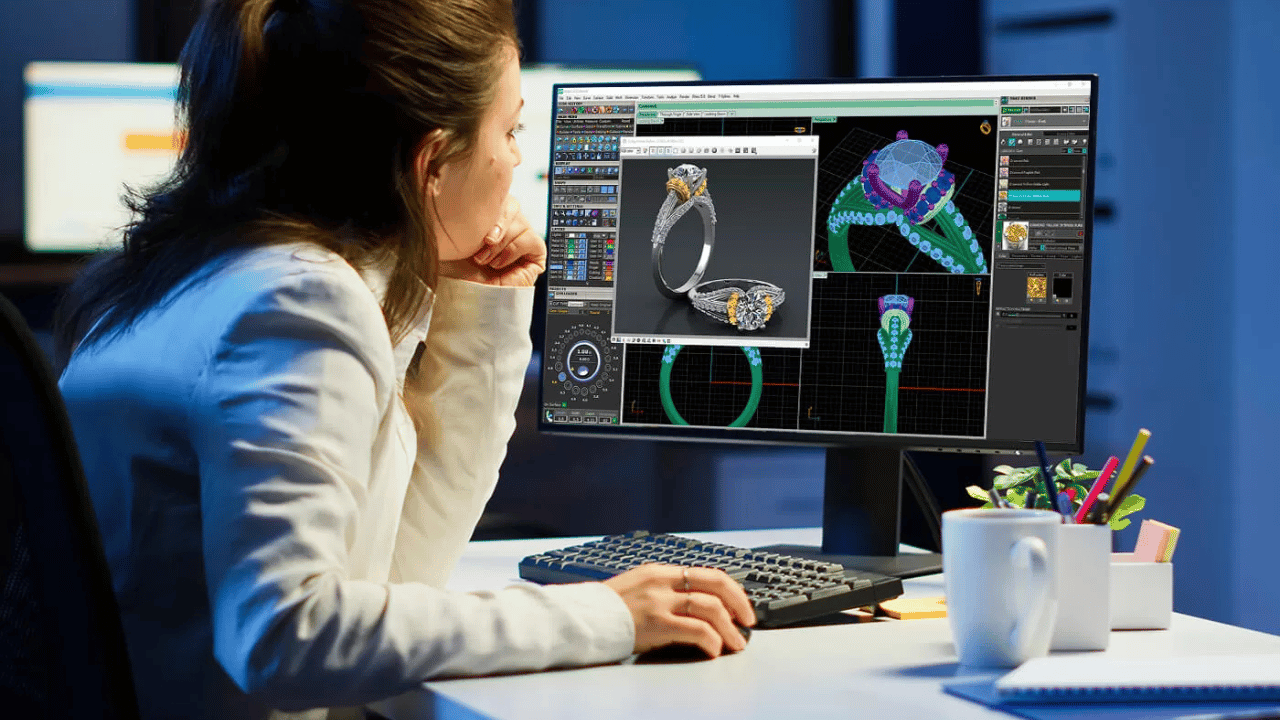
Brands choose OEM specifically to utilize advanced manufacturing capabilities, such as Royi Sal’s 3D CAD Modeling & Rendering services. This allows the brand to hand over a concept—be it a sketch or a mood board—and have the manufacturer’s expert engineers create the precise, production-ready CAD model. This partnership guarantees the technical feasibility of complex, structural designs while maintaining the brand’s creative vision.
3. Full Control Over Materials and Specifications
OEM provides the brand with ultimate control over every detail: the specific alloys used, the exact quality of the gemstones, the type of plating (e.g., thickness of gold plating in microns), and the finishing techniques. This is particularly important for brands committed to strict ethical sourcing or proprietary material blends, ensuring the final product meets all internal compliance and quality standards.
III. The Strategic Crossover: Navigating the Transition
The decision to move from ODM to OEM is often tied to a brand’s lifecycle. It is not an either/or choice, but a strategic progression.
A. Phase 1: ODM as the Launchpad
A brand typically starts with ODM (or a mix of both) to build capital, understand customer preferences, and validate market segments. They focus on low Minimum Order Quantities (MOQs) and testing various popular styles offered by the manufacturer.
B. Phase 2: The Shift to OEM for Differentiation
The transition usually occurs when the brand achieves a stable customer base and recognizes that its longevity depends on proprietary designs.
C. The Geopolitical and Economic Drivers
Economic factors can also drive the OEM decision. As brands scale, they may decide to consolidate production under OEM to gain better cost control and negotiate higher volumes. Furthermore, external pressures, such as changes in tariffs or trade policies between major markets, push brands to work with manufacturers like Royi Sal in stable hubs like Thailand, using the OEM model to ensure clear proof of origin for their unique products, thereby bypassing trade barriers.
IV. Royi Sal: Facilitating Both ODM and OEM Success
Royi Sal’s expertise lies in serving as a comprehensive manufacturing partner that supports a brand regardless of its current stage.
A. Seamless Design Integration
For OEM clients, Royi Sal is a production powerhouse, translating the brand’s creative vision into accurate CAD/CAM files and utilizing its advanced 3D Sampling Workflow to generate precise, castable prototypes. The process is defined by joint approvals at the digital rendering and physical prototype stages, ensuring the final piece perfectly matches the client’s specifications.
B. The ODM Advantage
For ODM clients, Royi Sal offers access to its in-house designed collections and market-tested collections. This minimizes the client’s risk while ensuring the jewelry is produced using the same high-quality materials and manufacturing standards—including ethical sourcing practices—applied to all OEM orders.
C. Supporting the Crossover
Royi Sal is uniquely positioned to manage a brand that uses both models simultaneously: maintaining an ODM line for mass-market essentials while developing a proprietary OEM line for its signature, high-margin items. This flexibility allows the brand to grow organically without switching manufacturing partners, ensuring continuity in quality and supply chain management.
V. Conclusion
The choice between ODM and OEM is a vital piece of the strategic puzzle for any jewelry brand. ODM offers a foundation built on speed, low risk, and market entry efficiency. OEM is the necessary next step, providing brand exclusivity, IP ownership, and full control over creative and ethical specifications. By partnering with a versatile manufacturer like Royi Sal, brands can strategically employ the right model at the right time, ensuring that their product development aligns perfectly with their business objectives and market ambitions. The ultimate goal is to move beyond simply selling jewelry to confidently owning and defining the jewelry that your customers will wear.
Ready to explore what a strategic switch could mean for your business? Let’s talk.
Share this post






Responses (0)