


Your hands know the feeling. The meticulous work of setting a stone, polishing a band, and carefully packaging each piece that carries your brand’s name. As a jewelry designer, this passion is your foundation. But what happens when demand starts to outpace your ability to create? You’re stuck in a loop of making, packing, and shipping, with no time left for designing or big-picture strategy. This is the growth ceiling many talented creators hit. The secret to breaking through isn’t just about working harder; it’s about working smarter. The key is finding strategic jewelry partners who can help you elevate your brand and scale your operations in ways you simply can’t do alone. This guide will explore how to identify, vet, and build powerful partnerships to grow your jewelry business sustainably.
Strategic Manufacturing Jewelry Partnerships
I. The Two Pillars of Jewelry Partnerships: Production and Promotion
Before you can find the right partner, you need to know what kind of help you’re looking for. Scaling a jewelry business typically requires support in two core areas: making the product and marketing it. These are your partnership pillars. Production partners are the experts who help you physically create more jewelry. This could be a casting house that can produce 100 of your signature rings, a stone setter who can handle intricate pavé work with precision, or a full-service manufacturer who manages your entire supply chain. Engaging these partners is how you move from being a solo artisan to a scalable brand, freeing up your time to focus on design and growth.
On the other side, you have promotion partners. These are the people and brands that help you get your beautiful creations in front of new, engaged audiences. This category includes wholesale boutiques, influencers who align with your aesthetic, and even complementary brands for a collaborative collection. A partnership with a popular fashion blogger or a curated online marketplace can build social proof and drive sales far more effectively than a modest ad budget. Identifying your biggest bottleneck, whether it’s production or visibility, will tell you which pillar to build first.
II. Finding Your Diamond in the Rough: How to Source the Right Partners
Once you know what you need, the search begins. Finding reliable partners can feel daunting, but the right connections are out there. For production and manufacturing partners, industry trade shows are an invaluable resource. Events like JCK in Las Vegas or Vicenzaoro in Italy bring together trusted suppliers, casters, and manufacturers from around the globe. Online directories from industry organizations like the Manufacturing Jewelers & Suppliers of America (MJSA) are also fantastic for sourcing vetted professionals. Don’t underestimate local connections; ask other jewelers in your community for recommendations. Always request samples and references before committing to a large production run.
Sourcing promotional partners happens in a different arena. Social media is your best tool here. Look for influencers whose followers match your ideal customer profile and whose values align with your brand. For wholesale jewelry accounts, create a list of dream boutiques and stores that carry brands similar to yours. A personalized, thoughtful email to a shop owner is far more effective than a generic pitch. Consider collaborations with non-competing brands that share your target audience, such as a sustainable clothing line or a high-end candle company. The goal is to find partners whose audience will see your brand as a natural and exciting discovery.
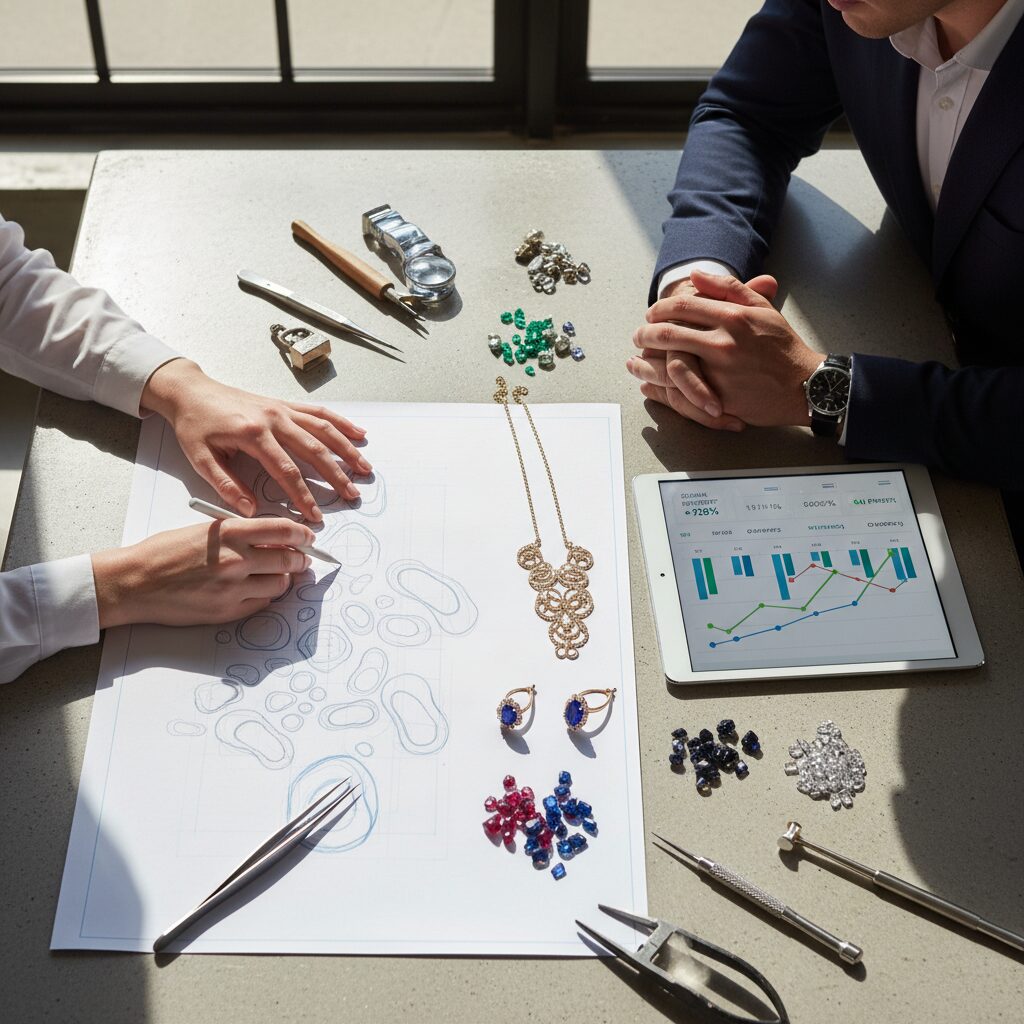
III. Crafting the Perfect Pitch: Your First Impression
Once you have identified a potential partner, the next step is the approach. This is where many promising collaborations falter. A generic, copy-and-paste email will almost certainly be ignored. Your pitch needs to be personal, professional, and packed with mutual value. Start by demonstrating that you have done your homework. Reference a specific aspect of their brand that resonates with yours, whether it’s their sustainable sourcing, their elegant aesthetic, or a recent marketing campaign you admired. This shows genuine interest and separates you from the crowd.
Your proposal should be concise and benefit-driven. Instead of focusing on what you want from them, frame it around what you can achieve together. How will this partnership benefit their customers and their bottom line? For instance, if you are approaching a luxury resort, you might explain how an exclusive, co-branded jewelry line could enhance their guest experience and provide a unique retail opportunity. Imagine pitching a line of pearl and aquamarine pieces to a boutique hotel in Phuket, tying your designs directly to their serene, coastal identity. Clearly outline the proposed collaboration, a rough timeline, and the shared value proposition. End with a clear, low-commitment call to action, like suggesting a brief 15-minute introductory call to explore the possibilities.
IV. Structuring the Partnership: Defining the Terms of Success
An enthusiastic “yes” is just the beginning. The next crucial phase is defining the structure of your partnership. A handshake and good intentions are not enough to scale a business; you need a clear, written agreement that outlines the expectations for both parties. This formal agreement prevents future misunderstandings and provides a roadmap for your joint venture. The structure can take many forms, depending on your goals. A wholesale agreement is straightforward: they buy your product at a set price and sell it in their stores. A consignment model involves less upfront risk for the partner, as they only pay you after an item sells.
For deeper integration, consider a collaborative collection. This is where you co-design a limited edition line of jewelry, sharing in both the creative process and the profits. This model is powerful for brand building, as it combines the reach of both audiences. Another popular structure is an affiliate or ambassador program, where your partner promotes your jewelry to their followers for a commission on sales. Whatever model you choose, your agreement should explicitly cover financials, marketing responsibilities, intellectual property rights, timelines for deliverables, and the duration of the partnership. Laying this groundwork thoroughly ensures a smooth and profitable relationship for everyone involved.
V. Launching Together: The Art of Coordinated Marketing
With an agreement in place, it’s time to tell the world. A successful launch is a coordinated effort that leverages the strengths and audiences of both brands. This is not the time for one-sided promotion. Well before the launch date, you and your partner should develop a shared marketing calendar. This plan should detail everything from teaser posts on social media to the official announcement via email newsletters and blog features. Creating a unified narrative is key. Both brands should be telling the same story about why this partnership makes sense and why customers should be excited about it.
Invest in high-quality, co-branded marketing assets. This could include a professional photoshoot featuring your jewelry in your partner’s environment, such as your pieces being worn by a model at their resort or styled alongside their products. Video content, behind-the-scenes stories, and a joint press release can further amplify your message. On launch day, a synchronized push across all channels is essential. Cross-tagging on social media, linking to each other’s websites, and engaging with comments on both accounts creates a powerful sense of unity and doubles your promotional reach. By treating the launch as a true team effort, you build momentum that can carry the partnership to incredible new heights.

VI. Nurturing Your Partnerships for Long-Term Growth
Finding the right strategic jewelry partners is a huge milestone, but it is only the beginning. The real work, and the real reward, comes from nurturing these relationships to ensure they are built to last. Lasting partnerships are the engine of sustainable scaling, so it is vital to invest in them properly.
This process is rooted in three key principles: communication, alignment, and adaptation.
**Clear Communication:** Establish a regular rhythm for communication from the outset. Whether it’s a weekly call with your manufacturer or a monthly check-in with a retail partner, consistent contact prevents misunderstandings and builds trust. Be transparent about your goals, challenges, and wins, and encourage your partners to do the same.
**Mutual Alignment:** A successful partnership is a two-way street. Continuously ensure that your goals are aligned. Are you both still working toward the same vision? Celebrate shared successes and work through obstacles as a team. When your partners feel that their success is tied to yours, they become more than just a vendor; they become a true collaborator in your brand’s journey.
**Flexibility and Adaptation:** The jewelry industry is dynamic. Trends change, customer demands evolve, and supply chains can face unexpected disruptions. A strong partnership is one that can adapt. Be open to evolving your processes, exploring new ideas, and pivoting your strategy together. This agility is what will set your brand apart and allow you to scale effectively through any market condition.
Conclusion
From identifying the perfect manufacturer to collaborating with the right influencer, strategic jewelry partners are the cornerstone of scaling your business. The journey doesn’t end once a contract is signed; in fact, that’s where the most important work begins. The true power lies in nurturing these relationships through clear communication, shared goals, and a commitment to mutual success. Scaling isn’t a solo mission. It is about building a robust ecosystem of allies who believe in your vision and are invested in your growth. By putting in the effort to cultivate these collaborations, you aren’t just expanding your operations. You are creating a resilient foundation for sustainable, long-term growth that will help your brand shine for years to come. The right partners are waiting to help you build your legacy.
Ready to build the strategic partnerships that will elevate your brand? Let’s talk.
Share this post






Responses (0)